Desk work creates a very repeatable body pattern. Hips stay bent, the upper back rounds, the chest closes and the neck starts doing extra work. By the end of the day, many people feel stiff not because they did too much, but because they did too little variety of movement. I know it well: I spend around eight hours a day at a desk myself.
Why do my hips feel stiff after sitting?
Sitting itself is not the enemy. The problem is staying in one shape for too long without enough movement in the rest of the day. Over time the hips can feel sticky, compressed or resistant whenever you stand up, walk or try to stretch. Several things tend to be going on at once:
- The front of the hips stays shortened. A seated position keeps the hips bent for hours.
- The glutes do very little. A chair does the work of holding you up, so the muscles that extend and steady the hip are rarely asked for much.
- The spine and pelvis move less. The whole area gets used to a small range.
- Stiffness starts to feel normal. Ranges you never use gradually feel more restricted.
The NHS advises adults to "break up long periods of not moving with some activity" (NHS). That is the first fix: stand up, walk to get water, change position every 30 to 60 minutes.
What to focus on as a desk worker
- Hips: varied hip movement and lunge patterns to counter long sitting
- Upper back: rotation and extension through the thoracic spine
- Chest and shoulders: opening, with strength to hold the shoulders back and down
- Breath: slower breathing to ease end-of-day tension
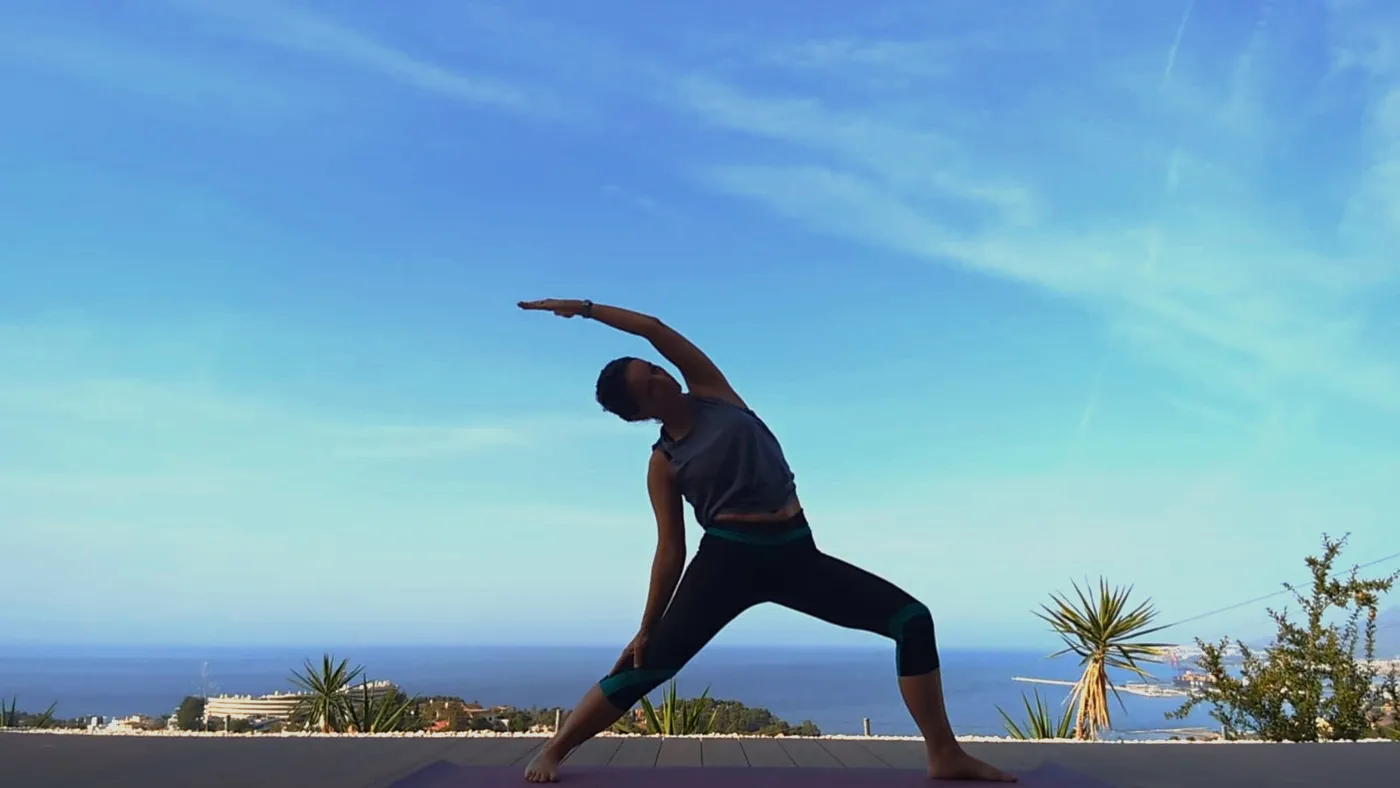
Hip-opening yoga practice after a day of sitting
This is the hip work described above, in a guided class you can follow after a long day at the desk.
Want the hips, back and shoulders covered in a plan? Try the 7-Day Reset for €9
Prefer to be guided? The 7-Day Move Better Reset is 7 short video sessions, 10 to 15 minutes a day, for €9.
Try the Reset for €9Why yoga works for desk workers
Yoga is often described as stretching, but a complete practice does much more. It takes your joints through their full range, asks you to control that range, and uses your body weight as resistance for the legs, hips, back and shoulders. Holding a lunge or lowering slowly from a plank is strength work, and the NHS lists yoga among its muscle-strengthening activities (NHS).
That matters because strength declines quietly. After 30, people can lose as much as 3% to 5% of their muscle mass per decade (Harvard Health). Range without strength fades quickly. Range you can control and hold, with balance and breathing that calm the nervous system, is what makes standing up from a chair feel easier over time. The wider picture is in Yoga for Mobility After 40.
Why consistency matters more than intensity
If you sit five days a week, your body benefits more from short regular resets than from one hard class every few weeks. Ten minutes most days is realistic, and Is 10 Minutes of Movement a Day Enough? explains what that can and cannot do. If you struggle to keep going, How to Stay Consistent With Exercise After 40 covers what helps. Stiffness that is worst first thing in the morning is a related topic: see Why Do I Feel Stiff Every Morning?
Move to try
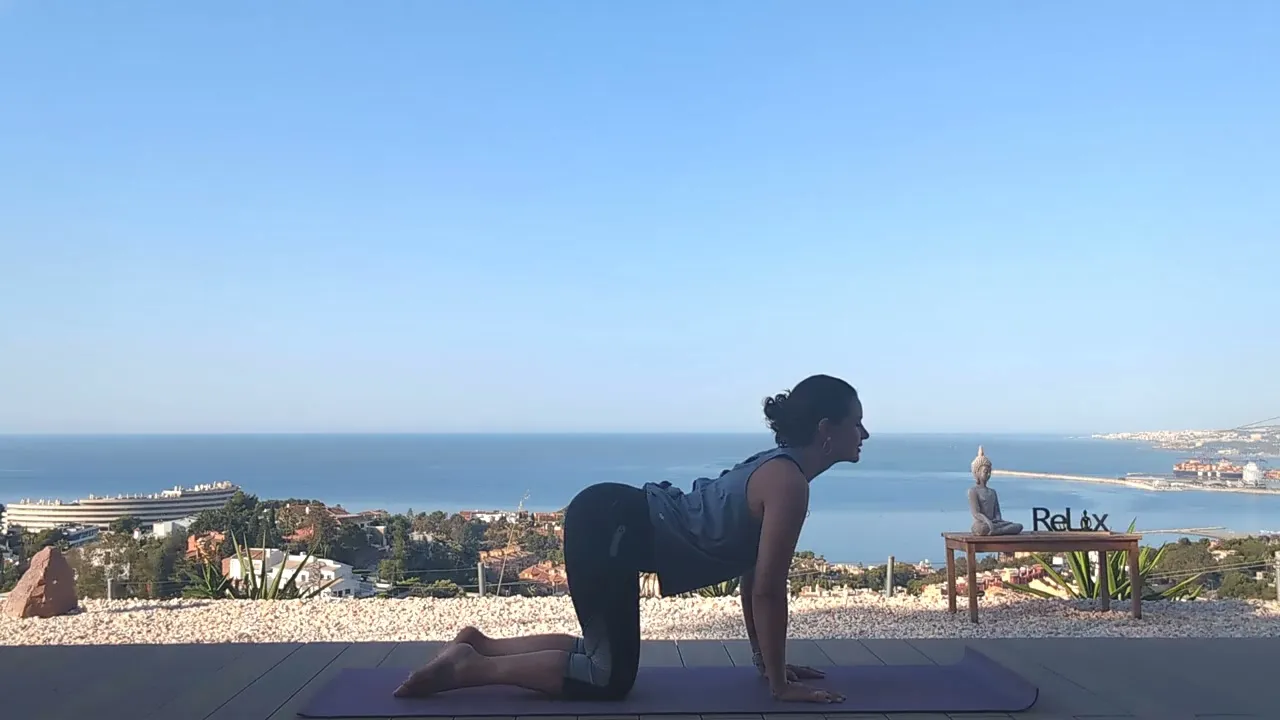
Cat-Cow (Marjaryasana-Bitilasana)
On all fours, inhale and let your belly drop as you lift your head and tailbone, then exhale and round your spine. Move slowly with your breath for about a minute. It is one of the simplest ways to bring movement back to the spine after time at a screen.
It is one useful move, not a complete practice. A complete session also works the hips, shoulders, legs and balance, and builds up gradually over the weeks.
When to see a doctor
If hip stiffness comes with sharp pain, catching, numbness, tingling, swelling, or a limitation that is worse on one side, or if it keeps getting worse instead of easing with movement, check in with a doctor or physiotherapist before carrying on.