Many people notice the same thing after 40: they wake up feeling fine in their head but not yet ready in their body. Hips feel heavy, the lower back feels guarded, and the first few steps to the kitchen take a little negotiation. I know this one personally. I am over 40, I wake up stiff most mornings, and I spend around eight hours a day at a desk.
The good news is that ordinary morning stiffness is not a sign that something is broken. It is mostly a sign of what your body did, and did not do, in the previous 24 hours.
Why you feel stiff after a night's sleep
Joints and muscles like to move. When they stay still for hours, they feel stiffer and less willing to go through their full range. The NHS describes this pattern for osteoarthritis as "increased pain and stiffness when you have not moved your joints for a while" (NHS), and a milder version of it happens to most of us after a night in bed.
That is why stiffness is usually worst in the first minutes of the day and fades once you walk around, shower and get going. Movement is what switches it off.
Why it gets worse after 40
Several things change at the same time, and they add up:
- Less muscle. After 30, people can lose as much as 3% to 5% of their muscle mass per decade (Harvard Health). Weaker muscles give your joints less support and control, so they guard more and feel tighter.
- Less variety. Most adults move through the same few positions every day: sitting, standing, walking on flat ground. Ranges you never use start to feel restricted.
- Long periods of sitting. A day at a desk or on the sofa leaves hips and the upper back stiff before you even go to bed. The NHS advises breaking up long periods of sitting with some movement (NHS).
- Stress and shallow breathing. Tension in the neck, shoulders and jaw often carries into the night.
- Old injuries. An ankle you sprained years ago or a sore back often shows up first thing in the morning.
Normal stiffness or something to check?
A useful rule is time. Everyday stiffness eases within about half an hour of getting up. The NHS notes that osteoarthritis stiffness usually wears off within 30 minutes, while stiffness from rheumatoid arthritis often lasts longer (NHS). Swelling, heat or redness in a joint is another reason not to just stretch it out.
When to see a doctor
See a GP if your stiffness regularly lasts more than 30 minutes, if joints are swollen, hot or red, if you have numbness, tingling or sharp pain, or if it keeps getting worse instead of easing with movement. Early diagnosis of inflammatory conditions like rheumatoid arthritis matters, because treatment works better when it starts early.
What helps most
The goal is not to force a deep stretch the second you get out of bed. Cold, stiff tissue does not like being pulled hard. What works is waking the body up gradually, then giving it the strength to stay that way.
- Move early, move gently. A few minutes of slow movement before you sit down for breakfast or email makes the rest of the morning easier.
- Break up sitting during the day. Morning stiffness is partly built the day before. Getting up every 30 to 60 minutes helps more than any single stretch.
- Build strength, not only range. Muscles that can hold and control a joint let it relax. This is where yoga helps most.
- Keep it short and regular. Ten minutes most days does more than one long session a week. More on that in Is 10 Minutes of Movement a Day Enough?
Morning mobility and flexibility flow
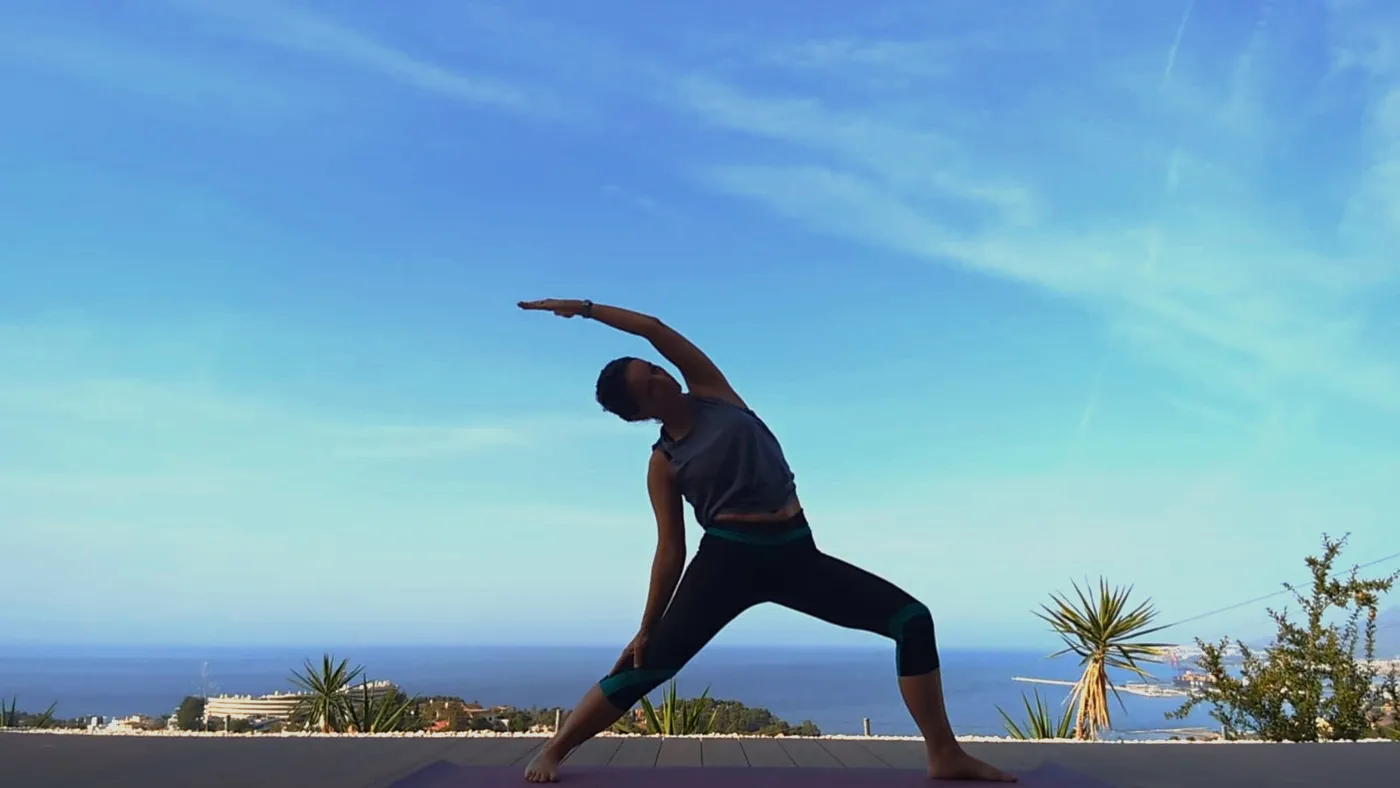
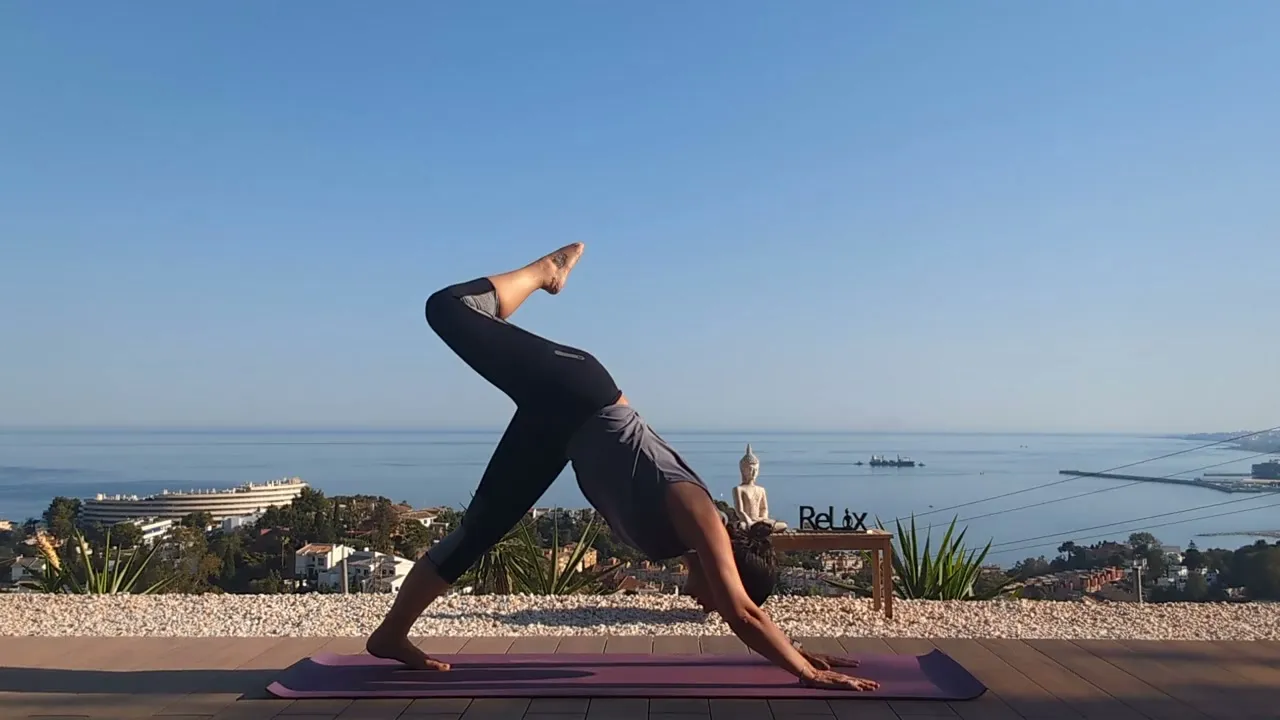
A guided morning flow that puts the movement advice above into practice, combining mobility, flexibility, strength and balance.
Short on time on weekday mornings? The 7-Day Reset has sessions of 10 to 15 minutes
Prefer to be guided? The 7-Day Move Better Reset is 7 short video sessions, 10 to 15 minutes a day, for €9.
Try the Reset for €9Why yoga works well for morning stiffness
Yoga is often described as stretching, but a good practice does much more. It takes your joints through their full range, asks you to control that range, and uses your body weight as resistance for the legs, hips, back and shoulders. Holding a lunge or lowering slowly from a plank is strength work. The NHS lists yoga among its muscle-strengthening activities (NHS).
That combination matters for stiffness. Range alone fades by the next morning. Range that you can control and hold, with balance and breathing that calm the nervous system, is what makes the first movements of the day feel easier over time. I explain the full picture in Yoga for Mobility After 40.
One move to try tomorrow morning: cat-cow
Come onto your hands and knees, hands under shoulders and knees under hips. As you breathe in, let your belly drop and lift your chest and tailbone. As you breathe out, press the floor away, round your back and let your head hang. Move slowly with your breath for about a minute. It wakes up the whole spine without asking anything extreme of it.
It is one useful move, not a complete practice. A complete morning session also works the hips, shoulders, legs and balance, and builds up gradually over the weeks.
What to expect
In my classes, people who practise most days usually say the first change is in the morning: getting out of bed and down the stairs feels less like negotiation. Bigger changes in strength and range take weeks of regular practice. If you struggle to keep going, How to Stay Consistent With Exercise After 40 covers what helps.