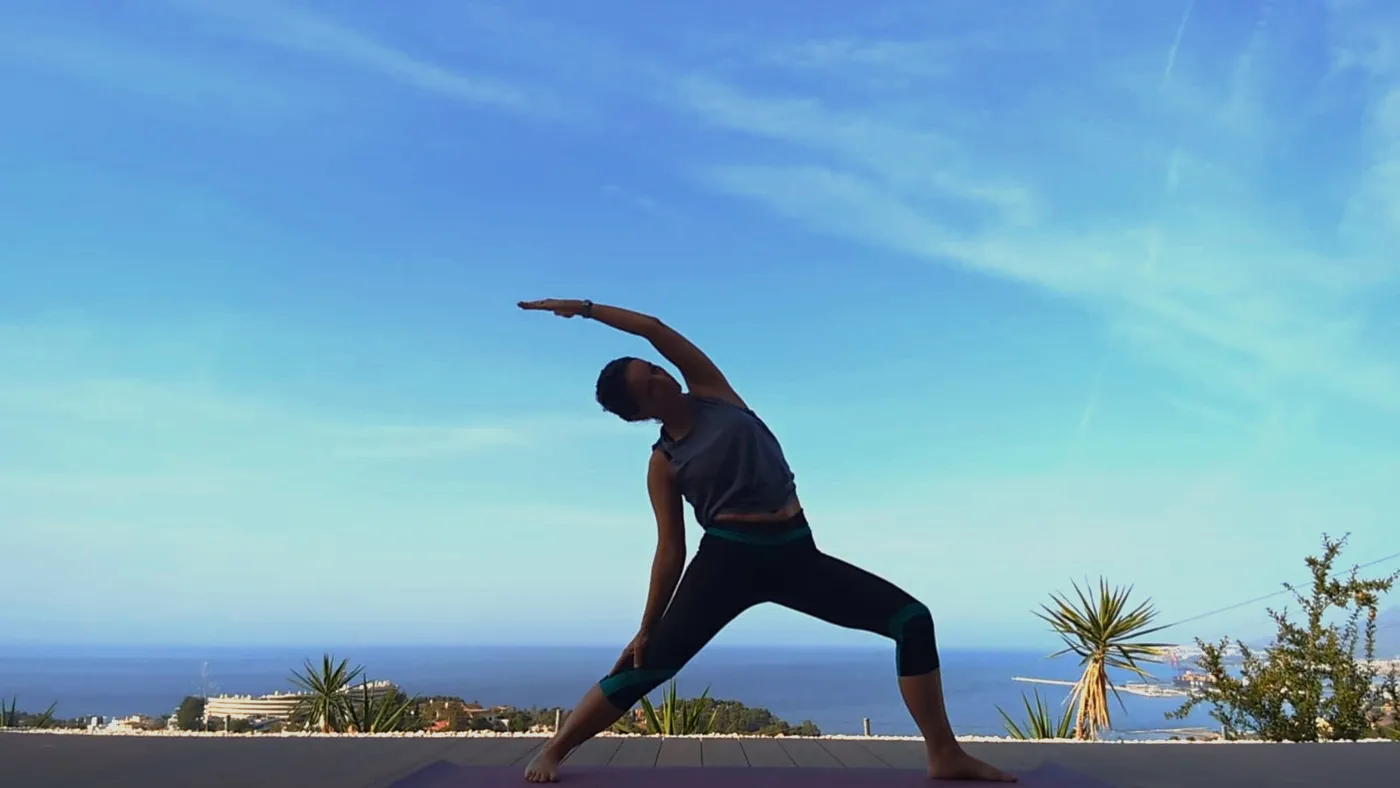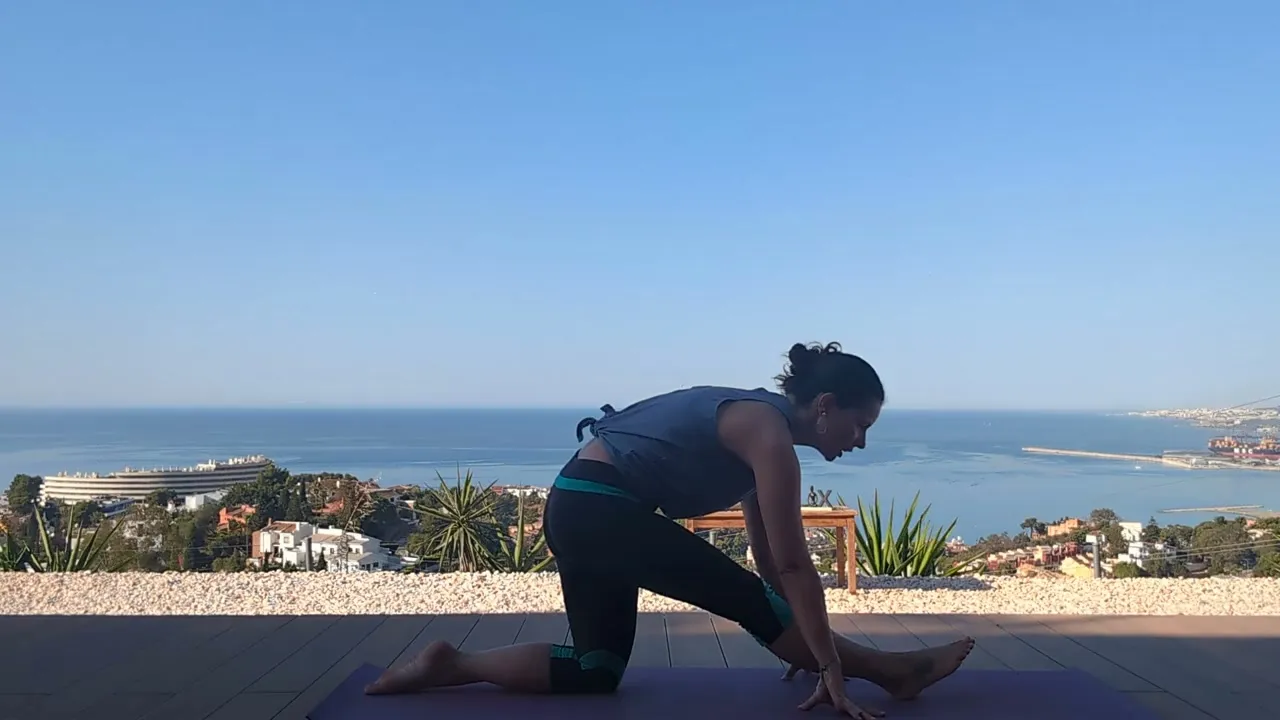
For many adults, getting down to the floor is fine. Getting back up is the hard part. You reach for the sofa, push off a knee, or make a small noise you did not used to make. It is frustrating, but it is also useful information about what your body needs.
The good news is that this is a trainable skill, not a fixed sign of age.
Why it gets harder after 40
Getting up from the floor is a small test of the whole body. It asks for several things at once:
- Leg and hip strength. You lift your body weight from low down, using your thighs and glutes. When these muscles are weaker, your hands and knees take over.
- Ankle and hip mobility. To get your feet under you, ankles need to bend and hips need to open. Years of sitting on chairs make both stiffer.
- Balance. The moment you leave the floor and come up to standing is the least stable part, and you need steady control through it.
- Practice. Many of us rarely sit on the floor now, so the movement gets less familiar. Fear of getting stuck can also make us tense.
None of these are about being "old". They are about use. A stiff, weaker, less practised body finds the movement harder, and a body that trains it finds it easier. I know this from the inside: I am over 40, I spend around eight hours a day at a desk, and I notice quickly when I stop moving in varied ways.
What the sitting-rising test shows
Researchers have used this exact movement as a simple test. In the sitting-rising test, you lower yourself to sit on the floor and stand back up using as little support as you can. Each part is scored out of 5, losing a point for each hand or knee you use, giving a score out of 10 (ScienceDaily report on the 2012 study).
In a Brazilian study of 2,002 adults aged 51 to 80, followed for a median of 6.3 years, people with the lowest scores had a 5 to 6 times higher risk of death than the top group, and each extra point was linked to 21% lower mortality (ScienceDaily).
This is an association, not proof of cause. Getting up from the floor does not extend your life by itself. What it reflects is the strength, mobility and balance that support daily life, and those are all things you can train. Use it as a prompt, not a verdict.
Prefer to be guided? The 7-Day Move Better Reset is 7 short video sessions, 10 to 15 minutes a day, for €9.
Try the Reset for €9Why yoga works well for this
Yoga is often described as stretching, but it is a complete method. It takes your hips and ankles through their range, uses your body weight as resistance for the legs and glutes, and asks you to control balance in every transition. Lunges, low squats and moving from kneeling to standing are exactly the movements the floor needs. The NHS lists yoga among its muscle-strengthening activities (NHS).
That combination is what matters. Strength without range leaves you stuck. Range without strength leaves you wobbly. Training them together, with slow control through each transition, builds confidence along with capacity. I cover the wider picture in Yoga for Mobility After 40.
One move to try: the slow chair squat
Stand in front of a sturdy chair, feet about hip-width apart. Slowly bend your knees and push your hips back as if to sit, touch the seat lightly, then stand up again, pressing through your whole foot. Keep it slow, especially on the way down. Use your hands for support if you need them.
It is one useful move, not a complete practice. A full session also works the hips, ankles, core and balance, and builds up in stages over the weeks.
Keep it safe
- Practise on a non-slip surface, next to something stable such as a sofa or wall.
- Go slowly and stop if you feel sharp pain, dizziness or pressure in the knees.
- Do not test yourself repeatedly if you are tired or unsteady.
When to see a doctor
See a GP if you have fallen, if you feel unsteady or dizzy, if getting up is getting rapidly harder, or if you have joint swelling, sharp pain or numbness. The NHS also advises a GP visit for any worries about balance or mobility, and calling 999 after a fall if you may have injured your head, back, neck or hip, or cannot get up (NHS).
Little and often
Short sessions most days beat one long one. Is 10 Minutes of Movement a Day Enough? explains why, and How to Stay Consistent With Exercise After 40 helps you keep going. If you also feel stiff first thing, Why Do I Feel Stiff Every Morning? may help. If you would like a clear starting point, the Move Better program builds the strength, mobility and balance underneath this movement.